In the demanding arena of contemporary pro-level sliding, victory is no longer solely a result of brute engine power or behind-the-wheel aggression. Instead, it has become a intricate discipline which demands a meticulous marriage of choosing a inherently capable car, outfitting it with the most precise performance parts, and, most importantly, grasping its live behavior on the course through sophisticated vehicle dynamics analysis tools. This exhaustive manual acts as your blueprint from the initial idea of a competition vehicle through to the last data-informed adjustments that turn a capable car into a predictable champion. We will examine in detail the methodical process of chassis dynamics adjustment, demonstrating how a advanced vehicle dynamics tool like a dedicated telemetry system removes guesswork and offers unmatched insight into your chassis's real-world behavior.
The foundation of any successful competitive sliding vehicle is, undoubtedly, the chassis itself. Several cars have achieved iconic standing within the global sliding culture due to their natural balance, durable build quality, and the vast availability of specialist support available. Picking the correct starting point is the initial and most crucial selection a enthusiast will make. As an example, the BMW E36 is commonly accepted as among the greatest all-around drift platforms of the modern era. Its excellent balanced front-to-rear weight, coupled with a RWD layout and bulletproof straight-six motors, establishes a chassis that is simultaneously forgiving for newcomers and extremely effective in the possession of a pro driver. The next step of this lineage, the BMW E46 platform, improves on these qualities with a more developed frame, broader wheel track for enhanced confidence, and yet increased turning capability directly from the manufacturer. Another formidable platform in the professional scene is the Chevrolet Corvette C6.
This American performance car offers a particular array of advantages to the sideways world, such as a light aluminum frame, a transaxle-style gearbox and differential unit that aids in an excellent weight distribution, and the tremendous low-end power of a large-displacement LS-series V8 engine. This blend transforms it into an complete monster on track, able of initiating and holding continuous drifts with relatively easy application of throttle. For those desiring exceptional bang-for-the-buck, the Nissan Z33 excels as a prime choice. It comes from the factory with a robust chassis, a decent original locking differential, and the responsive VQ35DE powerplant that provides ample performance for mastering and advancing in the sport. Its follow-up, the 370Z model, brings additional improvements in body strength, suspension design, and peak motor performance, solidifying its position as a favorite selection among serious pilots. Other legendary platforms that merit attention encompass the agile unique Mazda FC RX-7, the ubiquitous Nissan S13 240SX, the torque-rich SN95 generation Mustang, the modern E90 3 Series, and the tiny yet surprisingly engaging and teachable Mazda Miata. Each of these platforms gives a different array of characteristics, complexities, and potentials, but they all have in common the basic ingredients essential to be transformed into a capable drift machine.
However, selecting the right car is only the beginning. To access the complete capability of any of these cars, significant modifications to the steering and suspension systems are utterly non-negotiable. This is where the world of precision aftermarket parts becomes vital importance. The single most game-changing upgrade for a serious drift machine is the fitting of a maximum-angle steering angle kit. These advanced kits, for example those manufactured by industry leaders like specialist manufacturers, are designed to significantly expand the car's available turning lock. A standard street car is highly restricted in how far its steering tires can pivot, a safety limitation for on-road use. In drifting, however, aggressive steering input is frequently required to control and sustain a angle. An steering kit replaces the factory steering knuckles, rod ends, and potentially control arms with pieces that allow the front tires to attain angles over 70 or even 80 degrees, versus a average OEM setting of around 40 to 50 degrees.
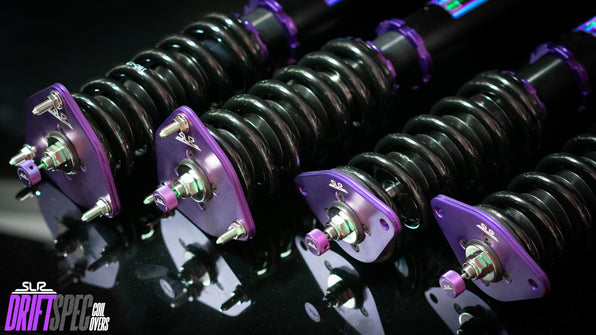
This immensely increased capability provides the operator with dramatically more authority during a slide, making it much easier to start a slide, hold it through a sweeping turn, and transition smoothly from one direction to another. The improvement in controllability is nothing short of revolutionary. Combined with a correctly specified modification is the just as critical enhancement to the vehicle's spring and damper setup. Off-the-shelf or including premium sport dampers are simply not intended for the specific and extreme demands of competitive oversteer. A purpose-built system of suspension units is of utmost importance. These specific suspension components have unique valving and spring strength that are optimized for the extreme load shifting that is typical of sliding. When a operator initiates a angle, the vehicle's weight is thrown rapidly to the outside of the turn. Optimal drift-spec dampers manage this movement in a controllable way, enabling the vehicle to find its balance rapidly and offering the pilot clear feedback through the controls and seat. They also enable accurate adjustment of ride height, rebound and compression rate, and weight balance, which are all integral elements of fine-tuning the vehicle's behavior to a given track or piloting technique. As a system, a top-tier drift angle kit and a properly specified set of drift-spec coilovers form the absolute hardware cornerstone upon which all later optimization is constructed.
Once the core hardware is fitted, the following vital step in the development is the precise adjustment of the vehicle's alignment. This is the world of vehicle alignment optimization, a process that can seem daunting to the uninitiated but is, in reality, the defining factor to converting a assembly of fast pieces into a harmonious and controllable machine. The most critical parameter of tuning for sliding is undoubtedly camber. Wheel camber is the tilt of the tire in relation to the vertical axis when viewed from the front of the vehicle. When the top edge of the tire is leaning towards the car, this is referred to as negative camber. For oversteer driving, an inward tilt on the steering wheels is universally used and is considered necessary. The logic is deeply linked to tire contact.
When a chassis is going around a bend at limit slip angles, the body tilts towards the external of the bend. This lean forces the outer front tire to lose its optimal footprint with the asphalt. By introducing negative camber, the tire is pre-angled to account for this tilt. As the car tilts into the turn, the tire becomes more upright on the track, increasing its bite at the exact moment when it is most required for directional command. Usually, front axle adjustments for a dedicated drift machine vary from approximately -3 degrees to as extreme as -5 degrees or even greater, contingent on the details of the car configuration, compound type, and driver style. The rear axle wheels also use inward tilt, but the angles are typically more conservative and subtler than the front axle. Overly aggressive negative camber at the rear can make the car overly loose and difficult to control on power input, as it reduces the available tire footprint of the powered wheels during linear throttle application. Hence, rear axle angles are often in the ballpark of -1 degree to -3 degrees, striking a delicate equilibrium between offering enough lateral grip to aid in starting and sustaining the slide while also maintaining effective hook-up for acceleration the corner. alignment is only one component of the broader alignment equation, which also includes toe setting, caster angle, and suspension-induced steering modification.
Toe is the direction of the tires as seen from above. Toe-in means the front edges of the wheels are closer together than the trailing edges, while negative toe means the opposite. For drifting, a small amount of front toe-out is often run to improve the initial response directional feel, making the chassis feel more nimble and willing to start a drift. Rear toe is generally set to neutral or a incredibly small amount of inward toe to promote stability under acceleration. Caster is the forward or aft angle of the suspension pivot when observed from the lateral of the car. Increased caster increases self-centering and stability solidity, and it furthermore adds to negative camber effect during turning, which is highly useful. Tuning these parameters is a complex interplay where a modification to a single setting can and often will impact the remaining parameters. The old-school method for setting a car's suspension geometry for sliding has long been a labor-intensive affair of trial and error. A tuner or crew would make a adjustment based on experience, run the car on track, depend on the driver's individual sensation and impressions, and then apply an additional change. This process would continue time after time until the vehicle felt "good" or the allotted practice period ended. This approach is not just incredibly wasteful in terms of time and tires, fuel, and parts, but it is also inherently flawed.
Human perception is a notoriously inconsistent measurement tool, influenced by numerous elements such as fatigue, varying track conditions, ambient heat, and merely the mood of the driver on that specific day. What feels "oversteery" on one pass might feel "tight" on the subsequent lap, leading to conflicting data and frustrating changes. This traditional challenge in chassis setup is precisely where state-of-the-art technology has stepped in to completely change the landscape.
The development and adoption of advanced drift telemetry software has ushered in a completely new paradigm for tuning and optimizing competitive drift machines. These platforms, showcased by innovative products like data acquisition tools, work by actively capturing the actual dynamic movement of the car as it is being driven on the circuit. In contrast to depending on driver feedback, these tools gather quantifiable metrics on essential factors such as damper compression and extension, wheel speed, acceleration forces, wheel angle, and driver input input. This acquired data stream is then analyzed by sophisticated applications that can visualize and decode the information in a comprehensible format. For the very first time, tuners and builders can see precisely what the chassis is doing at any given point of a slide. This function transforms the whole chassis setup procedure. Imagine the specific goal of setting the front axle negative camber for a given vehicle. As an alternative to applying a change from -3 degrees to -3.5 degrees and then driving multiple passes to try and "feel" a difference, a telemetry system can deliver real-time and definitive data. The software can show graphically how the tire's loading is acting during the critical phases of a drift: the initial flick, mid-corner, and transition. It can demonstrate if the existing camber setting is allowing the loaded tire to keep maximum contact or if the compound is over-stressed on its outside edge.
The software can after analysis provide empirical suggestions for change. Perhaps the data reveals that the tire is even overworking its sidewall at -3.5 degrees of negative camber, suggesting that an increase to angle, say -4 degrees, might be warranted. Conversely, the data might indicate that the tire is not reaching heat or that the inner edge is degrading too quickly, which could suggest that there is excessive angle and a small lessening back to -3.2 degrees would be better efficient. This degree of precision and useful analysis was literally unimaginable in the days of exclusively manual adjustment.
The impact of using a comprehensive drift telemetry system goes much further than only optimizing camber angles. It becomes an essential suspension tuning guide that is tailored to your specific car. When fine-tuning the damping clickers on your adjustable dampers, rather than depending on general tips or vehicle dynamics tool copying another team's numbers, you can utilize the data to analyze how the chassis is performing in response to your tweaks. The software can display the wheel movement trace over a lap, showing if the shocks are managing the body movement properly or if they are permitting the chassis to become unsettled excessively after a transition. It can assist in identifying challenges like excessive compression or excessive extension, permitting you to make informed adjustments to spring preload, rebound/compression values, or stance. This approach applies equally to the complex process of suspension geometry optimization. Beyond camber, the tool can give data into how adjustments to toe and caster angle are affecting the car's balance during specific parts of a slide. For instance, it can assist you to determine the optimal amount of front axle negative toe for your individual steering rack configuration and piloting approach by showing the response time of initial reaction and the consistency of the chassis at full countersteer. This transforms the system an exceptionally useful drift suspension tuning guide that is dynamically updated by the actual behavior of your personal car on the track. It shifts the entire project from a subjective skill into a methodical optimization process.
Moreover, the value of a tool like data acquisition is not at all restricted to expert teams with extensive resources. For the amateur competitor, it serves as an amazing force multiplier. It in essence gives the builder with the analysis of a full-time dynamics engineer without needing the associated expense. It accelerates the learning curve by delivering unambiguous directions to questions that would normally take countless track days of experience to understand. A driver can understand how their individual chassis reacts to specific adjustments, building a deeper comprehension of suspension theory in the journey. It additionally opens up high-level suspension engineering principles, permitting all drivers with the ambition to refine their car to achieve it in a efficient and effective manner. This is notably important in a discipline like sliding, where setup know-how has in the past been a highly secretive advantage among elite teams. Now, that power can be in the toolkit of every serious builder.
In the final analysis, the process to building and dialing in the car alignment tuning perfect high-performance sliding vehicle is a comprehensive mission that seamlessly integrates classic mechanical principles with revolutionary digital solutions. It starts with the wise choice of a capable platform, then built upon the application of critical performance components like maximum-angle drift angle kits and properly valved drift-spec coilovers. The process then progresses into the intricate phase of alignment optimization, where parameters like camber, toe, and caster angle are precisely set to match the vehicle's new hardware and the operator's personal technique. Finally, and what really differentiates the contemporary methodology from the past, is the use of a powerful suspension tuning application. This platform eliminates the approximation and waste of purely seat-of-the-pants adjustment by delivering quantifiable, real-time data on how the chassis is actually functioning. It serves as an incredible suspension tuning tool, a actionable coilover setup manual, and a all-in-one performance analyzer. Together, this integrated philosophy guarantees that all aspect of the competition vehicle—from the selection of the platform to the most minute click on the coilover—is optimized for peak performance on the circuit. It embodies the complete maturation of the art of sliding, merging mechanical car control with data-informed chassis dynamics to build coilover setup tips the ultimate competitive cars attainable.